“resources SAVED by recycling”: Making recycling impacts measurable
Please enter your access code which you have received via email.
Climate protection through recycling
The annual “resources SAVED by recycling” study shows the contribution that recycling within the Interzero Group makes to conserving resources and reducing greenhouse gas emissions.
Reliable figures are key to illustrating the benefits of recycling and supporting the circular transformation of the economy. In cooperation with Fraunhofer UMSICHT, we therefore conduct a comprehensive life cycle assessment every year. It enables the differences in resource use and greenhouse gas emissions between primary production and recycling to be quantified.
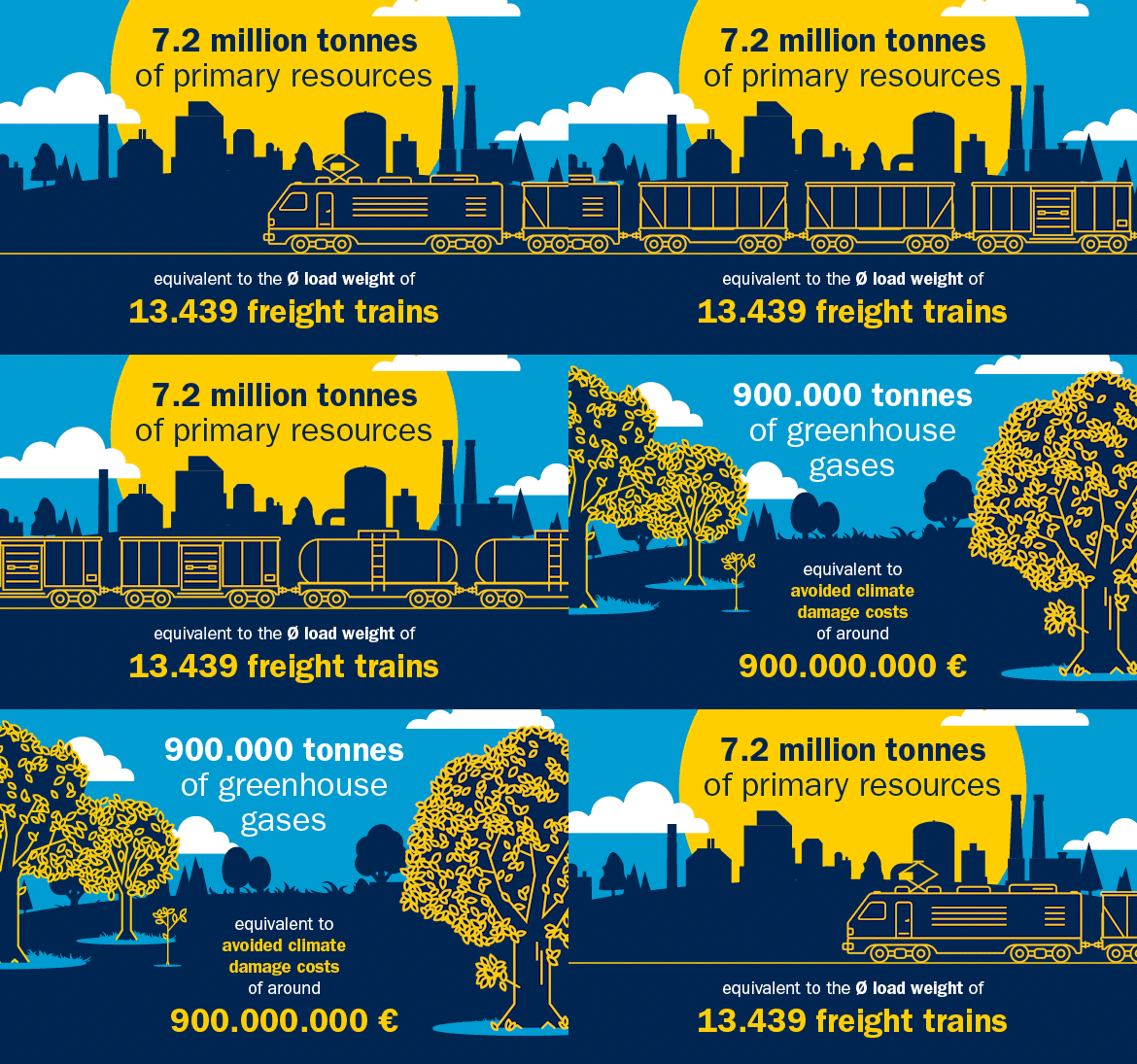
In 2025 alone, Interzero kept around 2 million tonnes of recyclable materials in the loop in Germany, Austria, Poland, Italy and Slovenia. Based on the Fraunhofer UMSICHT methodology, this corresponds to a calculated saving of more than 7.2 million tonnes of primary resources compared with primary production. This amount is equivalent to the average load carried by 13,439 freight trains.* Interzero’s recycling activities also avoided more than 900,000 tonnes of greenhouse gas emissions compared with primary production. This corresponds to avoided climate damage costs of around EUR 900 million when the interests of present and future generations are weighted equally.**
* Deutsche Bahn, Integrated Interim Report 2025
** German Environment Agency, Environmental Cost Handbook – Methodological Convention 4.0

Individual recycling impact at a glance
Together with our customers, we keep recyclable materials in the loop and quantify the resulting impact. Based on the Fraunhofer UMSICHT methodology, Interzero calculates individually for each customer how many primary resources are conserved and how many greenhouse gas emissions are avoided through recycling compared with primary production. The results are documented transparently in an individual impact statement and made available to the customer. Transparency is a fundamental value for us and is also highly valued by our customers and partners.
Reducing transport distances and reusing IT devices
In another study from the “resources SAVED” series, Fraunhofer UMSICHT assessed how the refurbishment and reuse of IT and communications devices organised by Interzero affect resource use and greenhouse gas emissions. Depending on the device type, reuse or refurbishment can reduce greenhouse gas emissions by between 18 and 37 per cent compared with purchasing a comparable new device. Extending the useful life of a smartphone results in particularly high calculated savings of 34.7 kg of greenhouse gas emissions. Compared with a single conventional life cycle, reusing a smartphone causes around 37 per cent fewer greenhouse gas emissions. Reused tablets save around 34 per cent, or 59.4 kg of greenhouse gas emissions. Refurbished laptops save around 31 per cent, or 107 kg, and desktop PCs around 18 per cent, or 163 kg, compared with a conventional life cycle.
Key Specialist Corporate Marketing

Our company
Shape the circular economy of the future with success.