Professional waste management for hotels and restaurants
Many different kinds of waste are created each and every day in hotels and restaurants – from food waste and cooking oils to glass, cardboard and other types of packaging. A professional waste management solution can help to keep these waste types separated while complying with legal requirements and saving resources.
Challenges to waste management in the hotel and restaurant trade
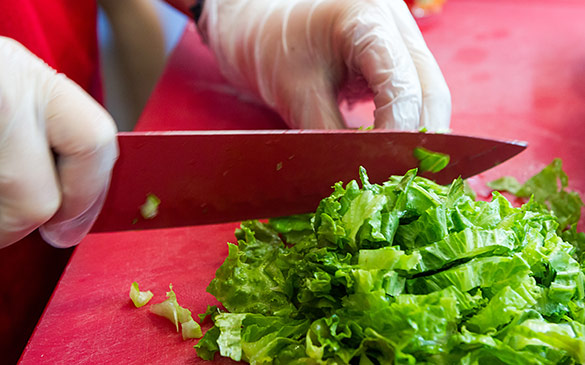
Every day, hotels and restaurants produce waste in a wide range of different categories – each of which are subject to specific legal requirements and disposal routes.
Typical challenges faced here include:
- Limited storage space for waste containers
- Legal requirements for waste separation and tracking
- Seasonal variations in waste volumes
- Hygienic storage of food waste
- Wide range of packaging materials (plastics, paper, cardboard, etc.)
- Glass bottles and jars from beverage sales and beverage sales and kitchens
Without a structured waste management strategy, processes quickly become inefficient, costs start to rise and problems are encountered with legal compliance. In contrast, professional waste management ensures clear and cost-effective process flows as well as the sustainable recycling of waste materials.
Solution: Commission a tailor-made waste management strategy for your business
A professional waste management strategy covers much more than just container pick-ups. We advise and assist hotels and restaurants from the status quo analysis through to the long-term optimisation of waste management. A rough outline of the typical project structure is presented below.
1. Status quo analysis
First, we analyse a ‘snapshot’ of your current operations. This lets us identify untapped potential for optimisation and develop an action plan.
Related activities:
- Recording all waste types, volumes and costs
- Documenting the current infrastructure
- Reviewing legal requirements
2. Target strategy
We develop waste management options for relevant waste fractions while accounting for suitable collection systems and technical optimisations.
Related activities:
- Cost comparison (actual/target)
- Project implementation plan
- Definition of the billing model
3. Implementation
The final step is the rollout of the action plan agreed with the client, plus an optional pilot project.
Related activities:
- Finalisation with the client
- Continuous optimisation including cost control
- Performance tracking and billing
The end result is a set of optimised and legally compliant operating procedures that save time and money while promoting sustainability in your company.
Your benefits with Interzero:
Customised
A waste management service that is a perfect fit for your business.
Legal peace of mind
Let us take the strain when fulfilling your legal obligations (GewAbfV proof-of-compliance requirements, etc.).
Nationwide
We use our network of around 800 certified waste management firms to create all-in-one solutions – even in geographically challenging locations.
Cost effectiveness
Our cost analyses cover the entire supply chain to discover potential cost savings.
Digital & transparent
You can manage and track your orders 24/7 using our online portal, giving you an up-to-date overview for all your sites.
A single point of contact
Your designated system advisor is on hand to tackle your problems. When we say we’re easy to reach – we mean it.
Your one-stop shop
With our broad range of products, we have a solution to virtually any waste management problem.
Cost control
Interzero creates a transparent data and cost management system that includes regular KPI reporting.
Sustainable
Our action plans are always aligned with our ‘Zero Waste’ vision.
Site waste management for hotels and restaurants – typical fractions
In hospitality, waste management targets a range of fractions that need to be handled and disposed of separately. To be effective, waste management must ensure the separate collection of these various types of waste while ensuring that as many materials as possible can be returned to the recycling loop.
![[Translate to English - Englisch:] Leere Glasflaschen entsorgen](/fileadmin/_processed_/a/0/csm_abfallentsorgung-gastronomie-flaschen_c5f30c36a5.jpg "[Translate to English - Englisch:] Altglas entsorgen")
Standard fractions (EWC = European Waste Code):
- EWC 15 01 01 – Paper and cardboard packaging: Deliveries of food, beverages or kitchen supplies generate large volumes of packaging materials made from cardboard.
- EWC 15 01 06 – Mixed packaging (lightweight packaging, packaging from dual systems) This includes the plastic packaging and foils/films that regularly occur as waste in hotels and restaurants.
- EWC 15 01 07/20 01 02 Glass and glass packaging: Bottles and jars from beverage sales make up an important recyclables fraction. This type of waste can often be recycled.
Questions about the new Packaging and Packaging Waste Regulation (PPWR)? We’re happy to advise you on this key European law – contact us at consulting@interzero.de!
![[Translate to English - Englisch:] Speisereste sammeln in Behälter](/fileadmin/_processed_/4/f/csm_abfallentsorgung-gastronomie_4c7986c244.jpg "[Translate to English - Englisch:] Speisereste entsorgen")
Organic fractions:
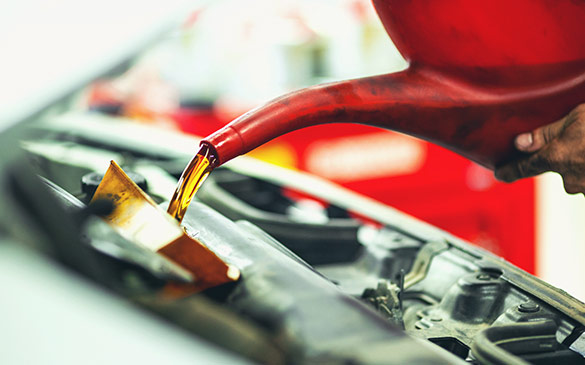
- EWC 20 01 25 Edible oil and fat: Cooking oil must be collected separately for professional disposal or treatment.
- EWC 20 01 08 Biodegradable kitchen and canteen waste (e.g. from hospitality/nursing facilities)
Need help with a different waste fraction? Then please get in touch!
Who will benefit from our services?
Every hotel or restaurant business has its own set of waste management requirements. Although a small restaurant produces different volumes and types of waste than a large hotel or company canteen, every business needs a system that is both efficient and reliable.
Our solutions are suitable for a wide range of businesses in this sector, including restaurants and cafés, hotels/hotel chains, canteens and large kitchens, catering companies, quick-service chains and franchise operators.
Legal requirements for waste management at hotels and restaurants
German hotels and restaurants must ensure that they comply with a wide range of legislation related to waste disposal, including the Circular Economy Act (KrWG), the Commercial Waste Ordinance (GewAbfV) the Organic Waste Ordinance (BioAbfV) and others, which include provisions on waste separation and the correct disposal of commercial waste.
With clear-cut separation systems, suitable collecting containers and documented disposal routes, these businesses can ensure that their waste is being handled in line with the law. We can also help your business – just call us!
Sustainability and recycling in the hospitality sector
![[Translate to English - Englisch:] Nachhaltigkeit Abfallentsorgung in der Gastronomie](/fileadmin/_processed_/1/2/csm_abfallentsorgung-gastro-recycling_4a4e339676.jpg "[Translate to English - Englisch:] Nachhaltigkeit Abfallentsorgung Gastronomie")
Sustainability is now playing an increasingly important role for many restaurants and hotels – both for ecological reasons and in response to expectations from patrons and business partners. A modern waste management strategy helps to save valuable resources while also returning as many materials as possible back to the loop. Recycling rates can be boosted significantly by focusing on waste separation and high-quality recycling. A long-term waste management strategy also allows hotels and restaurants to shrink their environmental footprint and strengthen their sustainability policy.
Need to meet CSRD requirements? No problem – with Interzero! We help you with CSRD compliance in the field of waste management.

Head of Solutions Management