Singapore Meets Walldürn – Practical Training for the Circular Economy of Tomorrow

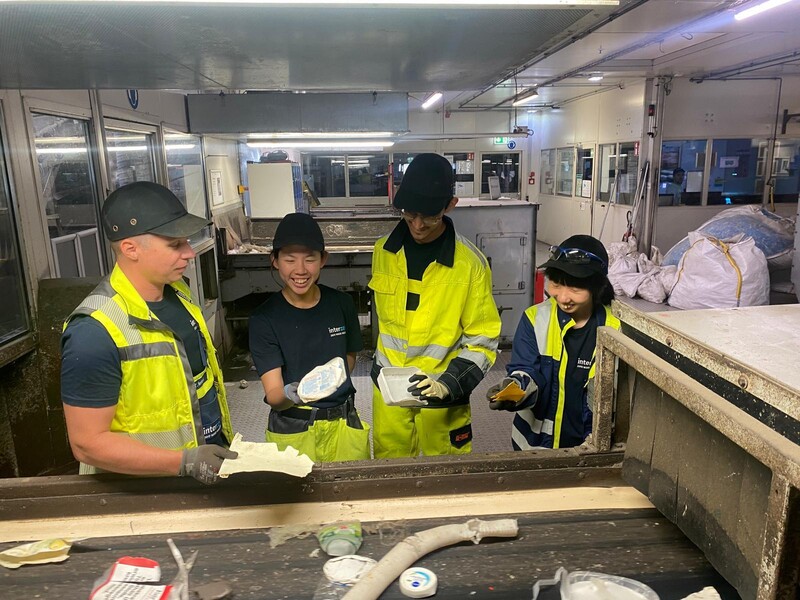
Sustainable transformation cannot be achieved alone. The vision of a world without waste can only become reality if recycling and resource conservation are considered and advanced on a global scale. Take packaging recycling, for example: driving the circular use of valuable materials and increasing the use of recycled content internationally requires a shared understanding and consistent quality standards. As a European innovation leader in sorting and recycling, Interzero therefore actively promotes the transfer of expertise – beyond the borders of the continent. Especially via close professional and personal exchange with the closely affiliated ALBA Group Asia. Claire Tham (26), a trainee at ALBA in Singapore, explains why gaining hands-on, on-site experience is so valuable. As part of a two-year programme, the young engineer is living and working in Germany to learn about state-of-the-art materials sorting technologies and processes at Interzero.
Moving from Singapore to Walldürn is a major step – both professionally and personally. What particularly appealed to you about the training programme at Interzero?
I have always wanted a job where I can apply my engineering skills to make a positive impact. My first exposure to recycling came through a project with a small start-up that turns used plastic into new products. Working with recycled materials sparked my curiosity about the field. So when I discovered Interzero’s training programme, I simply had to seize it! Germany is renowned for its engineering expertise – learning here how to design and operate a materials sorting plant is a unique professional opportunity. And, of course, it is also a wonderful chance to experience life outside Singapore.
Which stations have you seen at Interzero – and which experiences have most changed your understanding of recycling and the circular economy so far?
From operating the baling presses to controlling machinery from the control room: at Interzero’s materials sorting facility in Walldürn, I have learned about each station and process from the ground up. This was essential in deepening my understanding of the machinery involved, common operational challenges and the key considerations when planning a new plant. It has also changed my mindset as a consumer and shown me how product design and consumer behaviour can directly affect sorting efficiency and recyclability. This experience has made me realise just how much potential for innovation exists throughout the entire circular economy.
Many decisions in plant engineering are made at a desk. Why is complementary hands-on training so important?
I firmly believe that practical training is indispensable when it comes to designing an effective plant. Machine catalogues, calculations and plant layouts are often based on theory and best-case scenarios, but waste streams are inherently unpredictable. Observing operations first-hand makes it clear how materials and machinery actually behave under real operating conditions. Experiencing the entire process in practice helps me to reassess design decisions and identify how plants can be made more robust and fit-for-purpose.
Which specific learnings or approaches would you like to apply to future projects in Asia?
As I have only just begun my career here in Germany, I cannot yet assess with certainty how transferable specific recycling solutions will be – especially as climate conditions and the composition of waste streams can differ significantly. However, I can certainly envisage a stronger shift in Singapore from manual to automated processes in materials sorting facilities. What I will definitely adopt is the process design approach I have learned in Germany. It begins with a thorough assessment and comprehensive understanding of the input material and the desired output. This is followed by an iterative process in which the necessary sorting steps are designed and optimised through a series of trials and simulations to achieve the best possible results.
International collaboration also means engaging with different perspectives, mindsets and working cultures. How has this helped you grow personally – and what can Singapore and Walldürn learn from each other?
To give one example: meetings here often begin with a personal question – asking how someone’s weekend was or how they are doing. It may seem small, but it creates a sense of warmth and connection. Coming from Singapore, where school and working environments are typically fast-paced and efficiency-driven, this initially felt different to me. Over time, I’ve come to appreciate how strong relationships and trust within a team can further strengthen productivity and collaboration. Walldürn could learn from Singapore’s agility, efficiency and structured execution in fast-moving environments. At the same time, Singapore might benefit from placing an even greater emphasis on work-life balance and building personal connections at work.
You come from a metropolis of six million people. What has been your personal highlight in the small town of Walldürn in Baden-Württemberg?
The peaceful atmosphere and the warmth of the people. Life here seems to move at a much slower pace, which I find very refreshing and which helps me to live more in the moment. I also appreciate the proximity to nature: coming from a tropical country, it was truly magical for me to experience all four seasons for the first time. Or to see cows up close and buy fresh milk directly from a farm. To this day, I still feel a sense of joy whenever I pass horses or cows grazing in the fields.