
Food-grade recyclates: Interzero produces tomorrow's packaging raw materials

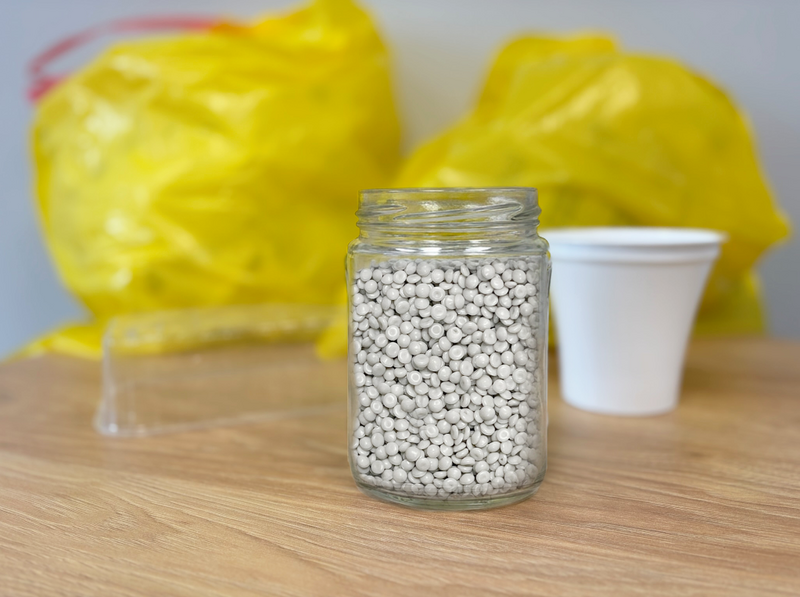
The bar is set high: from 2030, new plastic packaging for food or cosmetic products that is not made from PET must contain at least 10 per cent post-consumer recyclate (PCR) in order to be placed on the European market. By 2040, the minimum recycled content requirement is currently expected to rise to 25 per cent. While the requirements of the Packaging and Packaging Waste Regulation (PPWR) have long been known across the packaging industry, many companies still face one unanswered question: how can they reliably secure sufficient volumes of suitable recyclates in the future? As things stand today, the required quantities are not available. Recyclates suitable for contact-sensitive applications such as food packaging are in particularly short supply. One reason is that so-called food-grade recyclates are subject to extremely stringent quality requirements. For a long time, recycled plastic from household lightweight packaging waste was considered unsuitable for coming back into contact with cheese, meat and vegetables.
Mechanical recycling taken to the next level
Interzero is now closing the loop in Germany. The company has developed a process that enables used packaging from household lightweight packaging waste to be mechanically processed into food-grade recyclates. Approval by the European Food Safety Authority (EFSA) is currently being prepared, and following the successful completion of tests, the pilot plant is now under construction. Production of the first technical test materials for high-quality PP recyclate is scheduled to begin at the newly opened Dessau site in 2027.
For this high-tech process, Interzero uses material from its own lightweight packaging sorting facilities. In Dessau, the bales of sorted material are shredded, washed, re-sorted and then undergo an advanced treatment process. Whether for packaging for foods with a high acid content, hot-fill applications or microwaveable products, the mechanically recycled polypropylene (mrPP) is suitable for demanding applications.
Investing in the future: greater security of raw material supply, greater resilience
The production of high-quality PP recyclate at Interzero’s new Dessau site is another important step towards a circular future. According to economic experts, investments of this kind are urgently needed – not only to meet rising legal requirements for recycled materials, but also to strengthen raw material supply security and the resilience of European industry. According to a study by Boston Consulting Group (BCG), commissioned by the Federation of German Industries (BDI) from 2026, recycling and reuse could replace between 20 and 40 per cent of raw material imports by 2045. For companies, this means: “Those who control material flows, recover raw materials and scale circular business models create structural cost advantages and unlock new growth opportunities,” said BCG Partner Alexander Meyer zum Felde in the press release accompanying the study. Thomas Herkert, Head of Sorting & Processing at Interzero, adds: “In addition to investment and the right political framework, circular value creation also requires the right technology to produce high-quality recyclates in consistent quality and on an industrial scale.”
Particularly in times of geopolitical uncertainty, looming trade conflicts and fluctuating energy and raw material prices, access to high-quality recyclate is likely to become an increasingly important strategic competitive advantage. Recyclate providers such as Interzero are already helping their customers to manage material flows end to end and secure access to the raw materials they need. Through the right partnerships, companies can create greater supply certainty today, reduce their dependence on raw material imports and strengthen their competitive position over the long term. With Interzero, this partnership begins with licensing (EPR) and extends all the way to access to high-quality secondary raw materials – creating a truly closed loop.
With its current investment in Dessau, Interzero is also contributing to greater independence from raw material imports: “With our new site for the production of recyclates suitable for contact-sensitive applications, Interzero is continuing to invest in mechanical recycling to meet tomorrow’s demand, despite the currently challenging market environment. With this step, we are demonstrating just how powerful the circular economy can be and make a clear commitment to Europe’s raw material sovereignty,” explains Jan Kroker, CEO of Interzero.
![[Translate to English - Englisch:]](/fileadmin/_processed_/1/4/csm_230606-AGA-Tridi-Indonesia-PET-recycling_e3dcd2ad90.jpg "[Translate to English - Englisch:]")
![[Translate to English - Englisch:]](/fileadmin/_processed_/6/c/csm_240103_Rebranding_ALRE-AVL_800x533_35094750af.jpg "[Translate to English - Englisch:]")