“Electronic waste is one of the fastest-growing waste streams worldwide. We want to change that!” – An interview with Patrick Marscholl of Telekom

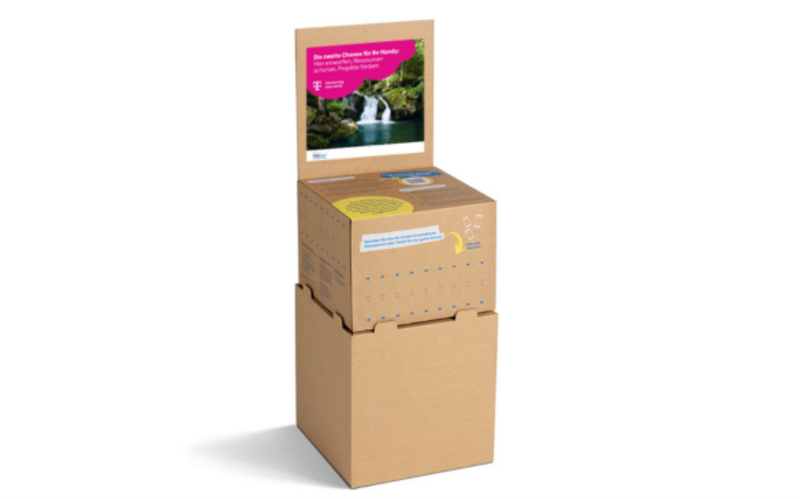
With the relaunch of the “Handysammelcenter”, Deutsche Telekom and Interzero are providing a solution for the millions of unused mobile phones and tablets gathering dust in drawers across Germany. The aim is to keep valuable raw materials in circulation, reuse devices whenever possible and make it easy to return unused mobile devices safely. Each device is inspected to determine whether it can be reused or recycled for its raw materials.
Interzero handles every step of the process chain. This includes providing the collection infrastructure and logistics, certified data erasure, refurbishment and resale, and proper recycling in collaboration with a certified partner.
The “Handysammelcenter” is part of Telekom’s sustainability strategy, which focuses on circularity and the responsible use of resources throughout the entire value chain.
In this expert discussion, Dirk Krolikowski, Managing Director of Interzero Product Cycle, and Patrick Marscholl, Senior Manager ESG at Telekom Deutschland, exchange views on sustainability in the IT sector and resource conservation, and discuss why climate protection and social engagement ideally go hand in hand.

What exactly does Telekom’s “Handysammelcenter” do?
Patrick Marscholl: With the “Handysammelcenter”, we offer a simple way to return unused mobile phones and tablets to the cycle and make the best possible use of valuable raw materials. This ensures that every device is inspected – it is either refurbished and reused or properly recycled in Germany.
Dirk Krolikowski: Mobile phones gathering dust in drawers and decommissioned corporate devices still have value and can be safely recycled. Phones or tablets returned through the “Handysammelcenter” stay in circulation and contribute to a more resource-efficient approach to managing end-of-life IT equipment. The “Handysammelcenter” is also an absolutely reliable option when it comes to data security.
The “Handysammelcenter” has been in operation since 2003. What has changed with the relaunch?
Patrick Marscholl: With our new partner, Interzero, we’ve streamlined the collection process: the new cardboard collection box allows for the secure transportation of devices via DHL, and for large-volume collections, Interzero can also provide fireproof boxes. We were particularly pleased by the interest shown by our existing partners – almost all of them, 12 in total, will continue to collect devices together with us.
Why does collecting old mobile phones matter?
Dirk Krolikowski: Mobile phones are particularly relevant from an environmental perspective because, on the one hand, they require a great deal of raw materials and, on the other hand, they often have short life cycles. Relative to the size of the product, a considerable amount of resources is required to manufacture a smartphone. A study by the Fraunhofer Institute UMSICHT shows that professional IT remarketing can reduce greenhouse gas emissions by up to 37 per cent . From our perspective, sustainability in the IT sector therefore means, above all, extending the lifespan of devices and closing material loops.
Patrick Marscholl: It is estimated that approximately three tonnes of gold, 20 tonnes of silver and about 1,300 tonnes of copper could be recovered from the roughly 200 million smartphones, mobile phones and tablets lying unused in drawers in German households alone. The “Handysammelcenter” therefore makes a tangible contribution to “urban mining” – the recovery of valuable raw materials from used products.
Although many people know that old devices don’t belong in a drawer, they still don’t turn them in. Why is that?
Patrick Marscholl: The most common reasons are the assumption that the device might be needed again, convenience, uncertainty about data protection, and a lack of knowledge about return options. Many people also underestimate the material value of old devices or think that a single mobile phone doesn’t make a difference. That’s why we need simple processes, clear information on data erasure, and communication that shows: Every device counts.
Speaking of data security: For many people, this is a major obstacle to turning in their old devices. How does the joint system address this issue?
Dirk Krolikowski: Data protection is a very important issue at the “Handysammelcenter”. Every device that is reused undergoes a GDPR-compliant data erasure process at Interzero in accordance with international security standards. The erasure is performed using the market-leading Blancco software in accordance with current, certified procedures. As a Blancco Platinum Partner, Interzero provides audit-proof, documented, and verifiable data destruction in accordance with the guidelines of the German Federal Office for Information Security (BSI).
What role does the “Handysammelcenter” play in Deutsche Telekom’s sustainability strategy?
Patrick Marscholl: At Telekom, we are guided by ambitious ESG (Environment, Social, Governance) goals. One of these is our aim to take back 50 per cent of the devices we bring to market in Germany by 2030. This goes far beyond our legal obligations. The “Handysammelcenter” – along with other measures taken by Telekom – contributes to achieving this goal.
And what are the biggest drivers of sustainability in the IT sector?
Patrick Marscholl: To ensure we have enough raw materials for our products in the long term, we need to use mobile devices such as smartphones and tablets for longer and return more used products to the circular economy. “Urban mining” plays an important role in this. In line with the motto “Reduce. Reuse. Recycle,” all devices should be used for as long as possible, repaired, or passed on before they are recycled. Currently, electronic waste is one of the fastest-growing waste streams worldwide – we must work together to change that.
The IT sector stands for innovation, but often also for high resource consumption and short product lifecycles. How can this contradiction be resolved?
Dirk Krolikowski: Technological progress and sustainability don’t have to be a contradiction if products are designed with a circular approach from the very beginning. This includes durable design, repairability, standardised components, a reliable supply of replacement parts, and effective take-back and recycling systems. The future lies in moving from a linear model to a circular system where materials stay in circulation for as long as possible.
The “Handysammelcenter” combines environmental considerations with social engagement. Why is it important to consider climate protection and educational initiatives together? And what role does collaboration with our partners play?
Dirk Krolikowski: Sustainability always encompasses ecological, economic, and social dimensions. Real impact is achieved when these dimensions align. When collection and recycling solutions simultaneously support social projects, sustainability becomes tangible and the added value becomes visible.
Patrick Marscholl: The partners of the “Handysammelcenter” are involved in various important social issues, ranging from rainforest species conservation to environmental education and supporting children living on an electronic waste dump in Ghana. The joint mobile phone collection effort clearly illustrates the interconnectedness of globalisation – from the extraction of raw materials in Africa, to manufacturing in Asia, to use in Europe. All partner organisations actively engage in educational initiatives, helping donors to better understand the importance of not letting their devices gather dust in a drawer.
What are your hopes for the future of this collaboration? Where do you see the “Handysammelcenter” in five years' time?
Patrick Marscholl: We want to increase the number of mobile phones, smartphones and tablets collected through the “Handysammelcenter” every year in order to meet our collection targets. To this end, we will also be developing innovative collection campaigns with new partners. Together with Interzero, we’ll continue to work on optimal logistics and recycling solutions, among other things. There’s still a lot of work to be done to empty Germany’s drawers.