Closing the loop: how InFACT aims to advance Europe’s packaging future

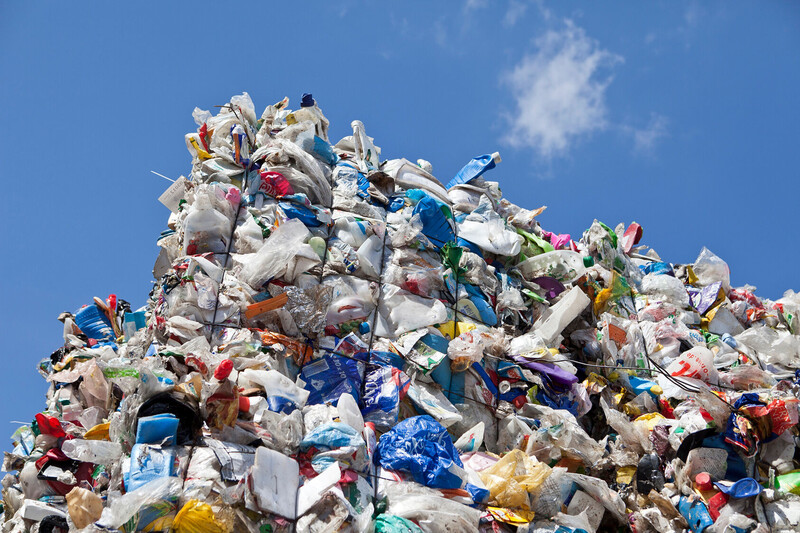
Flexible packaging accounts for a significant share of the European packaging market and, in the form of crisp packets, coffee pouches or snack packaging, is an integral part of everyday life for many consumers. According to industry association Flexible Packaging Europe, more than half of all food sold across European supermarkets is packaged in flexible packaging. It protects products, extends shelf life and makes an important contribution to quality and safety, particularly in the food sector. At the same time, it is one of the major unresolved challenges of Europe’s circular economy. The reason: so far, only a relatively small proportion is recycled. According to CEFLEX, the recycling rate for flexible packaging in Europe is below 20 per cent. One key reason for this is the high level of material complexity: many flexible packaging products consist of several layers of different plastics, together with barrier materials, printing inks, adhesives or metallised surfaces. This makes processing using mechanical recycling technologies difficult.
At the same time, the need for action is urgent. With the PPWR (Packaging and Packaging Waste Regulation), the EU is tightening requirements for the recyclability of packaging and the use of recyclates. For companies, this means that circular packaging solutions must work in practice, be supported by proper documentation and become economically viable.
“It is not a lack of willingness but material complexity, lack of standards and incomplete value chains that are holding back the circularity of flexible packaging,” summarises Dr Richard von Goetze, Director Corporate Development at Interzero.
This is exactly where InFACT (Infrastructure for the Flexible plastic pAckaging Circular Transition) comes in. The international project, led by the Danish research institute DTI (Danish Technological Institute), brings together 16 project partners from across the entire flexible packaging value chain: from municipalities and waste management companies to sorting and recycling companies, the chemical industry, packaging manufacturers such as Interzero partner Coveris, and food manufacturers placing packaging on the market. The project is also academically supported by the University of Southern Denmark. Its aim is to demonstrate, at pilot scale, how flexible plastic packaging collected from households can be turned back into food-grade feedstock for new packaging.
Cooperation across the value chain becomes a key success factor
Collaboration across the entire value chain is a key success factor for Interzero. After all, the circularity of packaging is not determined by packaging design alone or by a single recycling technology. What matters is the interaction between collection, sorting, material flow management, processing and reliable markets for recyclates. Thanks to its extensive access to material from household lightweight packaging collection, Interzero plays a central role in sorting the collected material and preparing the input for the respective recycling pathways.
In addition to DTI and Interzero, participants include Nestlé Nordics, Hilton Foods, Cloetta, Fraunhofer IVV, Topsoe and Coveris, among others. The project runs from 2026 to 2028.
The project also aims to demonstrate how regulatory requirements can be translated into practical solutions. “For manufacturers, brand owners and retailers, it is becoming increasingly important to optimise packaging not only with regard to product protection and design, but also in terms of its actual circularity. Cooperation across the entire value chain is therefore becoming the decisive success factor,” Richard von Goetze concludes. “And Interzero’s commitment to the InFACT project in the field of chemical recycling also complements our activities in our joint venture with the Austrian company OMV, where advanced sorting processes are used to prepare valuable materials that would otherwise end up in incineration for chemical recycling,” von Goetze adds.
For Interzero, the project is another step towards bringing circular economy principles into industrial practice and supporting companies and Europe as a whole on the transition towards more circular packaging solutions.