Batteries in Waste: Interzero Sets New Standards in Fire Safety

![[Translate to English - Englisch:]](/fileadmin/_processed_/4/1/csm_Akku_Brandschutz_a2de76e90e.jpg "[Translate to English - Englisch:]")
[Translate to English - Englisch:]
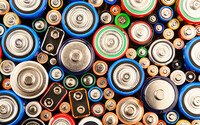
Whether in smartphones, e-bikes or cordless screwdrivers – lithium-ion batteries power our daily lives. They store large amounts of energy in a compact space, enabling us to stay connected, flexible and mobile at all times. Yet, these modern power packs also carry risks: “If disposed of incorrectly, they can quickly become a serious fire hazard,” explains Stefan Leubner, Head of the Technical Department at Interzero. The circular economy service provider operates five sorting facilities for lightweight packaging in Germany, and in every shift, teams discover one to three ignition sources.
Preventing Danger to People and the Environment
Aside from the fact that used batteries should never be placed in the yellow bin or residual waste, why aren’t they automatically sorted out in Interzero’s high-tech facilities right at the start of the sorting process? “Technical possibilities do exist, but unfortunately, they don’t help us in this case,” Stefan Leubner explains. The reason: “Batteries generally ignite due to mechanical impacts. Shooting them off the conveyor belt with compressed air, for example, would only increase the fire risk.” To avert danger for people and the environment and to avoid economic damage, Interzero has therefore opted for other solutions. The company has developed a new, comprehensive fire protection concept that goes well beyond statutory requirements and has also been included in the recommendations of the Bundesverband der Deutschen Entsorgungs-, Wasser- und Kreislaufwirtschaft e.V. (BDE / Federal Association of the German Waste Management Industry).
Different Approaches – Holistic Optimisation
“In our view, effective fire protection requires a consistent, 360-degree approach,” says Stefan Leubner. “We’re not only focusing on individual factors such as removal of objects from the process stream, building regulations, or requirements from insurance companies. We’ve analysed all relevant aspects and put everything to the test – from storage concepts and monitoring systems to sprinkler systems and object protection.” Special attention was given to the cameras used and the associated industrial extinguishing systems: “A widespread issue, for example, is the contamination of camera lenses in the dusty environment of the facility. Here, we have developed our own technical solution which allows for much more reliable detection of fire in its early stages.”
Consumers and Policymakers Also Have a Role to Play
The new standards, which apply to all Interzero facilities, reduce the risk of fires spreading and causing major damage. But despite all precautionary measures, recycling companies cannot solve the underlying problem on their own. To reduce the number of fires occurring in the first place, consumers and policymakers must also play their part. Through the “Hot Spot: Batteries” campaign, the BDE and its members are highlighting the dangers of carelessly discarded batteries and accumulators, and informing the public about correct disposal methods: Used batteries should be returned to specialist retailers or disposed of via local recycling centres. To create appropriate incentives, the BDE is among those calling for the introduction of an effective battery deposit return scheme.