Closing the loop on silicon: Interzero Italy pioneers circularity

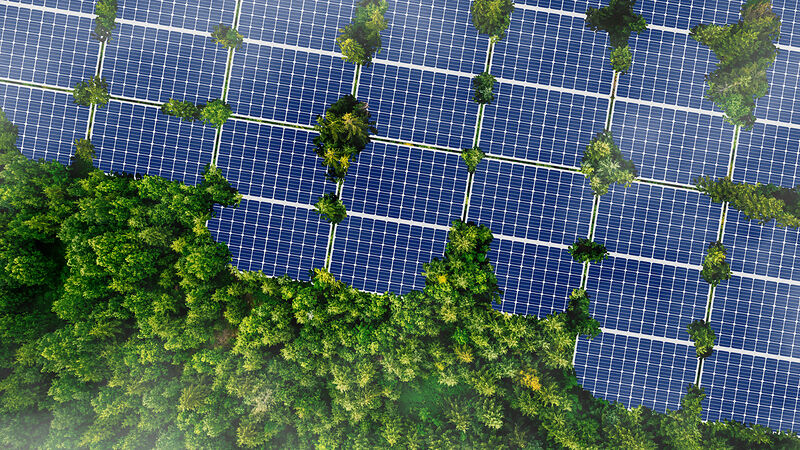
As the base material for microchips and solar cells, silicon is considered one of the most important raw materials of the 21st century – indispensable for the digital economy and the sustainable energy transition. Demand is rising rapidly, yet the primary production of high-purity silicon itself consumes enormous amounts of energy. This makes it all the more important to keep already extracted materials in circulation and return them for reuse.
Greater resource efficiency, lower environmental impact
On the path towards an efficient circular system, Interzero has now made fundamental progress. Within two years, the company in Italy has succeeded in recovering more than 1,700 tonnes of silicon from decommissioned photovoltaic modules and returning it to the industrial cycle while ensuring consistent quality. “In doing so, we are contributing to the development of a still nascent but strategically important and rapidly growing market,” says Mimmo Spada, Senior Manager of Interzero Italia. “At the same time, we are strengthening a model for greater sustainability in industry – one that is based on resource efficiency and creates genuine added value.”
Standardised processes for a stable value chain
Recovering silicon from photovoltaic modules is technically demanding and takes place in specialised recycling facilities. For industrial reuse, however, the silicon must meet strict criteria – foundries require specific parameters in terms of purity and quality. Guaranteeing homogeneous material, even when it originates from different processing plants, is therefore a complex challenge.
Interzero Italia has now succeeded for the first time in establishing a stable and efficient value chain for the further utilisation of recovered silicon. Interzero plays a central role as the interface between recycling and industrial use. The circular economy service provider purchases the silicon once it has been separated from the cells and channels it in consolidated volumes to specialised foundries. To do so, Interzero works with selected, highly qualified technical partners and subjects the recycled raw material to stringent quality checks.
Closing the loop
The potential is enormous: in Italy alone, around 24,000 tonnes of photovoltaic modules were decommissioned in 2024. In the coming years, this figure will multiply, as millions of modules installed over ten years ago are approaching the end of their service life. Although silicon accounts for only around ten per cent of a module’s weight, it is the most valuable material – and its recovery represents a future market that Interzero is already helping to shape today. As Mimmo Spada explains: “We want to further expand cooperation with foundries and suppliers, increase buying and sales volumes, and thus contribute to the emergence of an integrated, circular industrial system at European level.”