From mountains of used clothing to a closed-loop system: How EPR can strengthen textile circularity

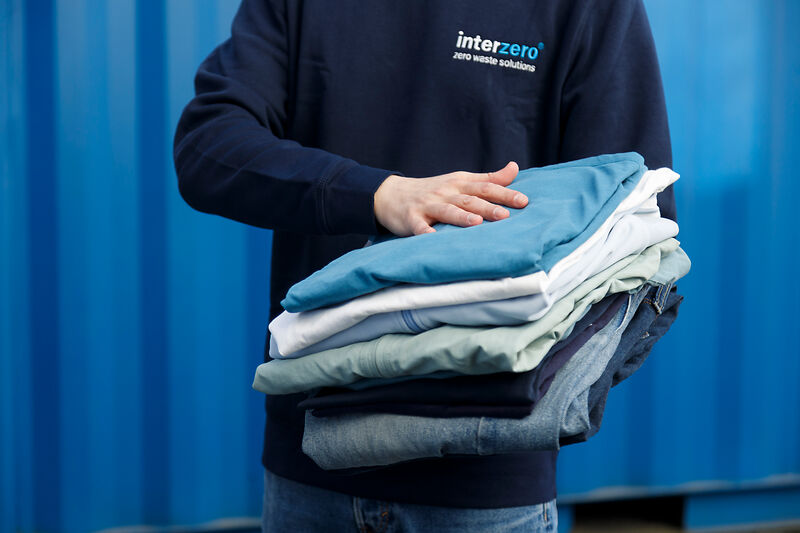
The European textile industry is facing a critical test. The global market for so-called fast fashion – clothing brought to market in ever shorter collection cycles and at low prices – is increasingly pushing the second-hand sector to its limits. Low-quality textiles lead to ever shorter periods of use. A functioning system for fibre-to-fibre recycling of high-quality textiles does not yet exist, while the growing volume of low-quality textiles is encountering volatile sales markets and high sorting costs.
The European Union aims to address this trend by introducing Extended Producer Responsibility (EPR). The basic idea is that anyone who first places textiles on the market also assumes financial and organisational responsibility for their collection, sorting, reuse and recovery after use. The costs should therefore no longer fall mainly on municipalities, collectors and recyclers, but should be incorporated in product responsibility.
The revised EU Waste Framework Directive provides a common European framework for this. The specific arrangements will be determined by the Member States. They are now faced with the question of what an effective, transparent and non-discriminatory EPR system should look like, and how existing structures can be meaningfully integrated.
A model for Germany: competition with clear rules
For Germany, a consortium coordinated by CIRCULAR REPUBLIC has developed answers. Representatives from the textile industry, the circular economy, research and other areas of the value chain have jointly drawn up recommendations for a German EPR system. Interzero has also contributed its many years of expertise in setting up and operating take-back, licensing and recycling systems.
At the core of the proposed model is a system of Producer Responsibility Organisations, or PROs, that uses competition without sacrificing ecological responsibility to price pressure. Manufacturers and distributors could commission such an organisation to fulfil their statutory obligations collectively. Depending on the specific design, these obligations include registration and reporting of quantities, financing and organising collection, and commissioning sorting, reuse, recycling and the funding of research and development (R&D).
Competition between several PROs is intended to promote efficiency and innovation. At the same time, common rules are needed to ensure that ecological objectives are not undermined by pure price competition. The consortium therefore recommends an independent central body. Among other things, it would register manufacturers and PROs, consolidate quantity and performance data, monitor compliance with requirements and create a level playing field through fair cost equalisation.
The principle is already well established in other areas of product responsibility: companies organise operational implementation in competition with one another, while a neutral body ensures transparency, oversight and fair balancing.
Integrating existing structures and expanding circular systems
Germany already has a network for the collection and sorting of used textiles. Municipal companies, commercial collectors, charitable organisations and specialised sorting businesses help ensure that clothing which can still be worn is passed on for further use.
We spoke with Michael Bürstner, Managing Director of the Interzero Recycling Alliance, about how a regulatory obligation can become an effective lever for the circular economy and what contribution Interzero can make. He is part of the consortium and, as Managing Director of the Dual System within the Interzero Group, is an expert in return systems.

Interview with Michael Bürstner
EPR is intended to ensure that responsibility for a product does not end with its sale, but covers the entire life cycle. As part of a consortium led by Circular Republic, Interzero has been working over recent months on a possible implementation pathway. What distinguishes the proposed solution?
Bürstner: The proposal combines competition with clear and verifiable rules. Several PROs can develop efficient and innovative solutions for their customers. At the same time, an independent central body ensures that quantities are reported correctly, ecological requirements are met and costs are distributed fairly. This balance is crucial: competition must be about the best circular solution – not the lowest environmental standards.
How should the system be organised, and which rules are important?
Bürstner: We advocate open, transparent tenders and clearly defined quality standards. The decisive point is that both municipal and private actors can participate in the system. In addition to return options that are as close to consumers as possible, robust requirements for collection, sorting and recovery are needed. EPR must not result in quantities merely being administered. We recommend that research and development related to sorting and collection infrastructure, recycling technologies, circular product design, the strengthening of reuse and repair, and digital traceability should be coordinated centrally through funds with transparent multi-stakeholder governance.
With EPR, will manufacturers of durable products not also have to contribute to a problem that has been intensified primarily by fast fashion?
Bürstner: Taking responsibility for one’s own products across the entire life cycle applies first and foremost to all manufacturers. But of course, important incentives can be created, for example through the level of producer fees. Under eco-modulation, durable, repairable and easily recyclable products could be placed in a better financial position than textiles that are difficult to keep in the loop. In this way, EPR has an impact not only at the end of a product’s life, but ideally right at the beginning, during design and material selection.
What perspectives was Interzero able to contribute to the discussions?
Bürstner: For Interzero, EPR for textiles is far more than an additional compliance task. If designed correctly, it can create the basis for a functioning market for secondary raw materials and enable investment along the entire textile value chain. As a circular economy service provider active across Europe, Interzero combines regulatory expertise with experience in take-back logistics, data management, sorting and recycling.
How will the success of EPR be measured?
Bürstner: Collected quantities alone do not create a circular system. What matters is what happens afterwards: How many products are reused? How many fibres make their way back into new textiles? Does the system create effective incentives for durable and recyclable design? EPR will be successful when it reduces the loss of resources and makes circular business models more economically attractive.
2028 sounds far away – but for manufacturers it is closer than many may think. What should manufacturers already be considering today when it comes to EPR for textiles?
Bürstner: That is right: important details still need to be clarified before national implementation. These include the precise scope, the calculation of producer fees, ecological criteria and the interaction with municipal and charitable structures. The consortium’s proposal provides a practical foundation for this. However, EPR is coming, and preparation will become a competitive advantage. Manufacturers are therefore advised to create transparency around product and quantity data at an early stage and to review the circularity of their portfolios. From 17 April 2028 at the latest, manufacturers will have to comply with the Europe-wide requirements for extended producer responsibility for textiles – those who establish the necessary structures now will then have a clear advantage.
The full System Design Report for the Textiles EPR in Germany is available on the Circular Republic website.
[Editorial note: The specific legal design and timetable for Germany’s EPR for textiles have not yet been finalised. The content presented in this article refers to the recommendations of the consortium coordinated by CIRCULAR REPUBLIC on the design of EPR for textiles in Germany.]